
An AI-driven content strategy platform streamlines complex content workflows by connecting strategy, planning, production, review and publishing coordination in one traceable chain. It speeds up preparation and quality control, but only shortens turnaround times when roles, permissions, response deadlines and CMS integrations are clear; human approvers retain control over content claims, staging and live publishing.
Key takeaways from this article
The greatest benefit comes from less context loss during handoffs and better visibility into decisions, dependencies and responsibilities.
- Define who can review, approve and escalate at each stage, with clear deadlines; shared status alone does not prevent delays.
- Use AI to check drafts against fixed quality and policy requirements before review, so human reviewers can focus on substantive and high-risk questions.
- Make sure reviewers have access to the brief, sources and change history; without that context, checks become superficial or delayed.
- Choose deliberately between one new production system and a coordinating layer on top of existing tools, and always designate one leading source for status and progress.
- Automate the handoff to the CMS only where content models and APIs support it; otherwise, the final publishing step remains manual.
- Safeguard central brand and compliance requirements without unnecessarily restricting specialist teams, and keep company data separate from public LLM training.
How one platform connects a complex content workflow, and where the limit lies
An AI-driven content strategy platform connects content strategy, planning, production, review, approval and publishing coordination as one manageable chain. The benefit is not only a shared overview, but also documenting the conditions under which work may move to the next stage: who makes a decision, which permissions are required and when approval must be given.
Explicit approval roles and approval SLAs therefore determine whether turnaround time is actually reduced. Without a clear owner or response deadline, an item remains pending even when everyone involved can see the same status. The platform makes that waiting time visible and structures the handoff, but it does not make the organizational decision.
The publishing architecture also limits automation. With structured content models and robust CMS APIs, the chain can extend all the way to publication. The available benchmark cites an 80% cycle-time reduction with well-configured automation; this is not an outcome that arises automatically without suitable content models, integrations and working agreements. If those conditions are missing, the automated flow stops before the CMS and the final handoff remains manual. For content publishing automation, the technical connection is therefore just as decisive as the workflow itself.
Central validation rules support brand consistency and reduce compliance errors. However, applying them too rigidly limits the ability of specialist teams to tailor pace and substantive approaches to their expertise. The setup must therefore safeguard shared requirements centrally without routing every content decision through a single central review layer.
AI speeds up preparation, not publishing approval
AI should clean up the review intake, not take over the publishing decision. Its value lies primarily in how attention is allocated: reviewers do not have to repeatedly return to predictable formatting and policy deviations, and can focus on the substantive questions that require human judgment.
Human-in-the-loop gates remain necessary for final staging and live publishing. These steps are irreversible and therefore remain reserved for authorized approvers; AI only supports draft preparation. A technically polished proposal is not formal approval.
When unvalidated drafts go directly to reviewers, repetitive corrections accumulate. This causes review fatigue: approvals are handled routinely or left pending. In both cases, campaign teams may find room to publish outside the agreed workflow through emergency procedures.
Do not require human approval for every small subtask. That increases the number of decisions and slows the process. Focus escalations on high-risk claims and retain human approval points for staging and live publishing; this keeps control concentrated where the consequences of a decision are greatest.
Why spreadsheets and context-poor approvals slow down the workflow
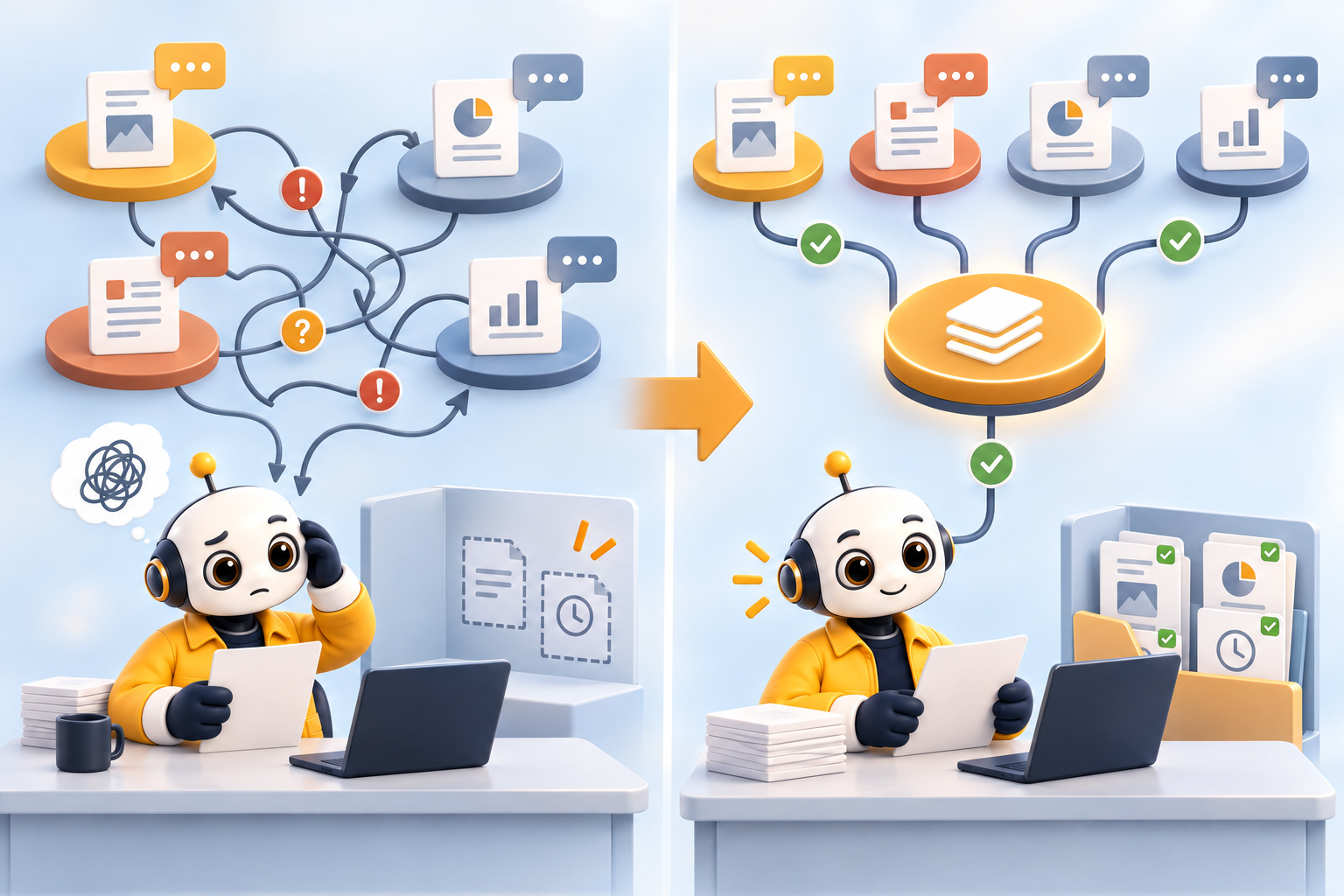
In large content organizations, delays often arise during handoffs: not because a draft is missing, but because teams are working with different versions, statuses and decision information.
- Separate spreadsheets and chat messages cause versions to diverge. When a content calendar circulates through separate files and messages, it can become unclear which version applies. Dependencies between teams also remain out of sight, causing work to be planned or handed over without visibility into what needs to be completed first.
- A review task without a dossier invites superficial checking. If a reviewer receives only the draft while the brief, source references and previous changes are missing, the basis for assessing choices in the proper context is absent. The review remains limited or waits until that information is gathered after all.
- Replacement and workflow orchestration require different trade-offs. Moving all departments to one new production system can encounter adoption resistance. An orchestration layer over existing tools preserves familiar ways of working, but requires more API connections and data integrations.
- A hybrid setup can perpetuate duplicate records. Status and changes are then maintained both in existing tools and in the coordination layer, allowing two records to contradict each other. The setup must therefore designate one leading status source that determines progress and handoffs.
How content moves from review to publishing with visible accountability
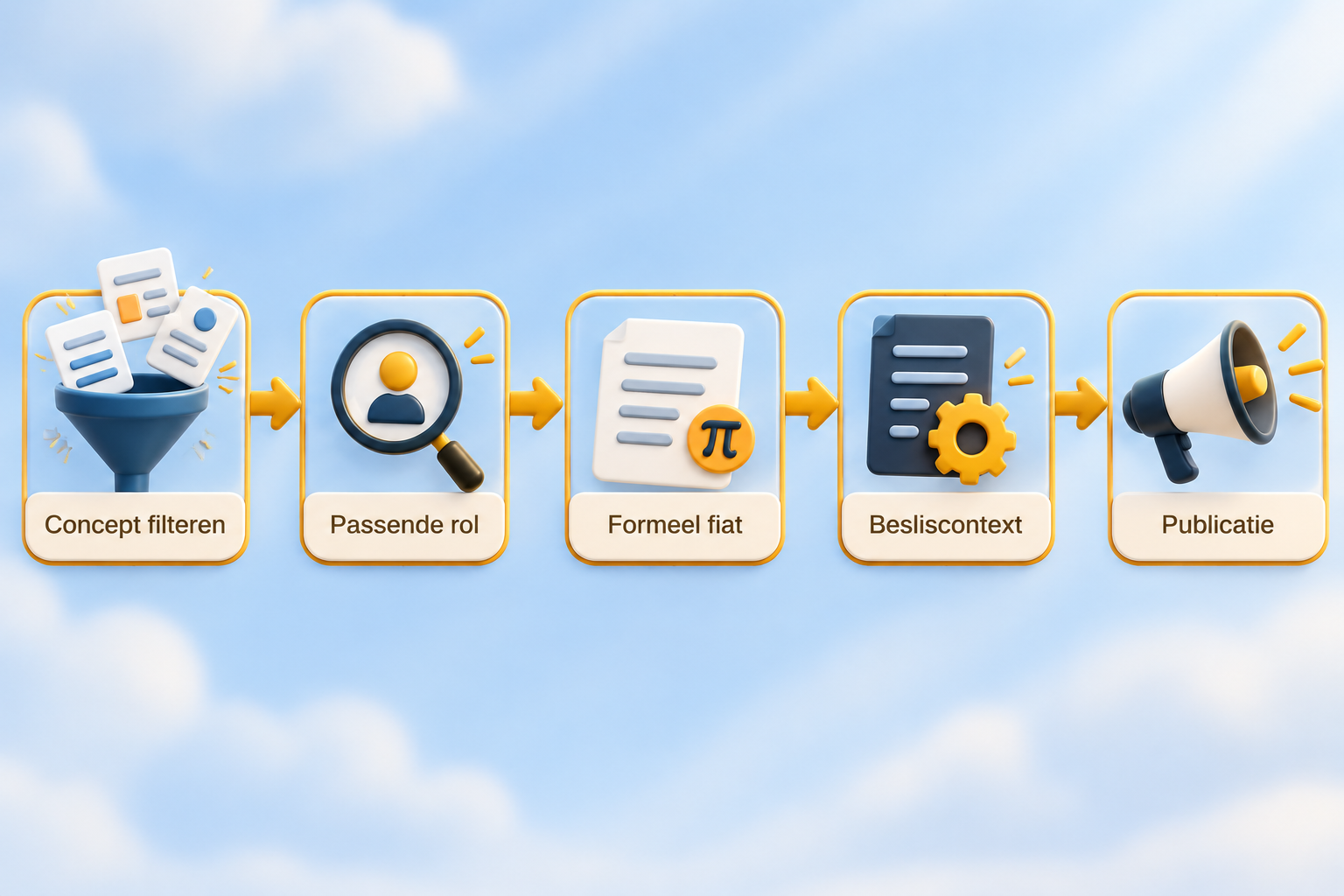
A connected workflow does not turn a draft into an independent decision. It organizes the information around that draft so that each role can assess it based on the same visible context.
- Make the review intake usable. Automated quality checks can flag fixed formatting and policy requirements in advance. This gives editors a draft ready for substantive review, while they remain responsible for that review.[1]
- Route work to the appropriate role. Multi-tier roles and permissions enable subject-matter experts, compliance officers and marketing managers to each use their own acceptance criteria and escalation paths.[2] A substantive objection therefore does not automatically end up with the same person as a formal policy question.
- Link formal approval to a status transition. When an authorized reviewer approves, that decision should be tied to the transition to the next stage. This keeps visible which part was reviewed and who authorized the transition.
- Preserve the decision context. Centralized audit logging can record status transitions, consulted sources and human approvals. This makes the route from strategic initiative to publication traceable.[3] Traceability remains useful only when teams consistently record these workflow steps.
An example of such a setup is Content Studio, where Company Intelligence, Market Intelligence, Segmentation and Decision Intelligence are connected to Planning, Research, Outline, Generation and Validation. This allows the content calendar and article to be built from the same central knowledge layer.
The coordination layer works only when decisions and data remain manageable
A central workflow layer only adds real control when it does more than display status and also makes decisions traceable. An immutable audit trail can record which paragraph received AI assistance, which source documents were used and which reviewer formally approved it.[3] This keeps AI assistance part of an auditable editorial chain rather than an invisible step between draft and publication.
That traceability is valuable only when company data and brand guidelines are clearly separated. Proprietary content and knowledge should not be available for training public LLM models. The precise arrangements for that separation partly determine whether a central knowledge layer suits the organization.
When evaluating a platform, the question therefore shifts from “can it produce content?” to “do the decision, source and responsible person remain visible?” Without records, it is no longer possible to determine afterwards why something was approved. Unclear data boundaries also increase the management burden and accountability risk, especially when more teams rely on the same workflow.